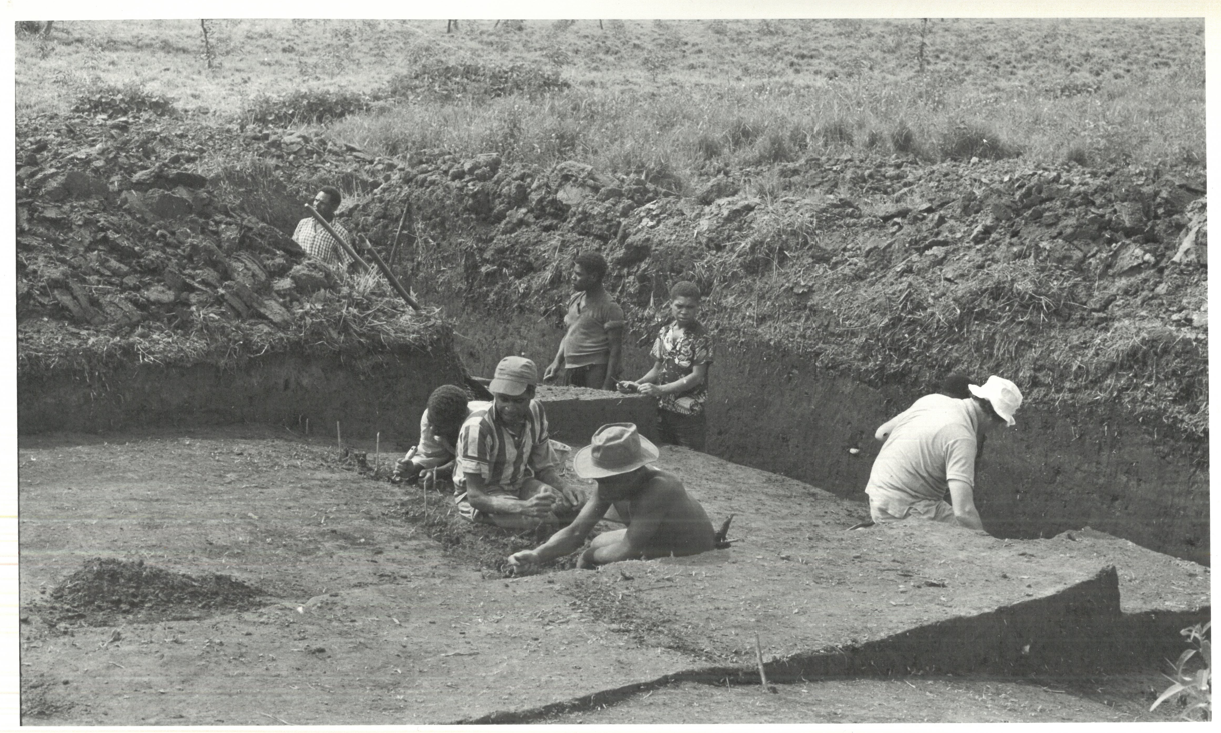
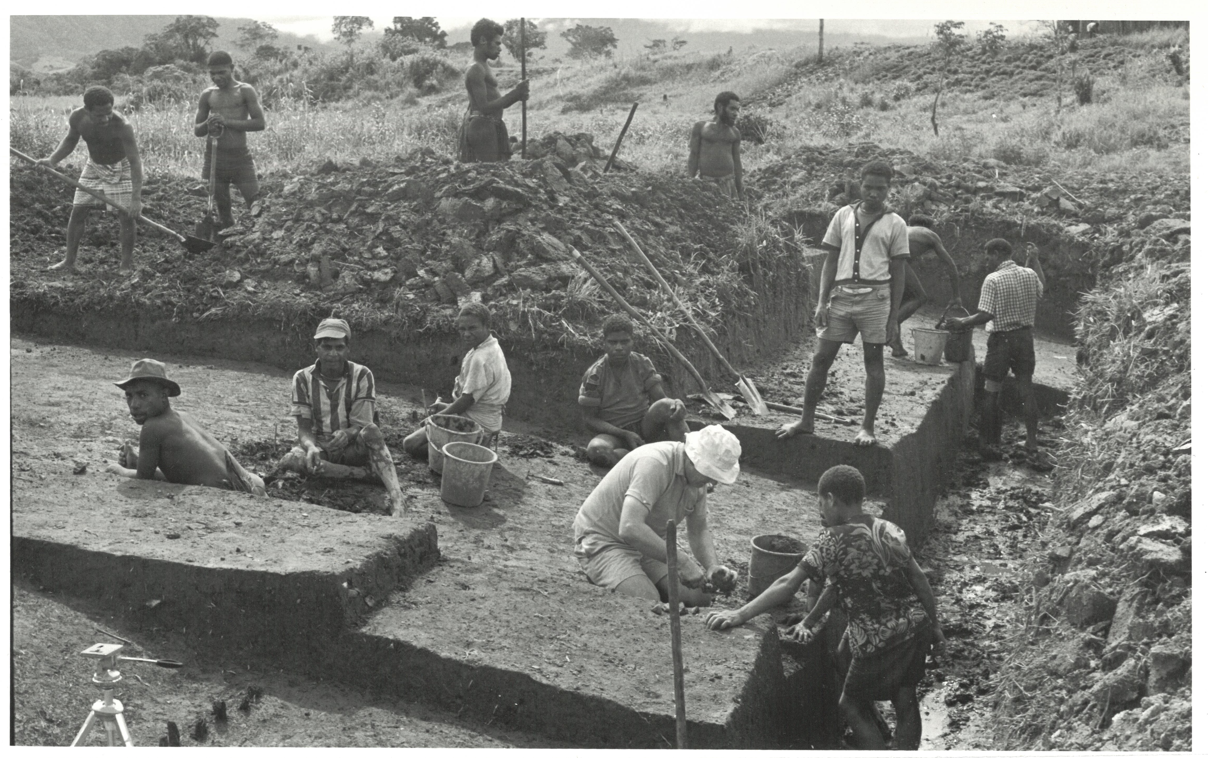
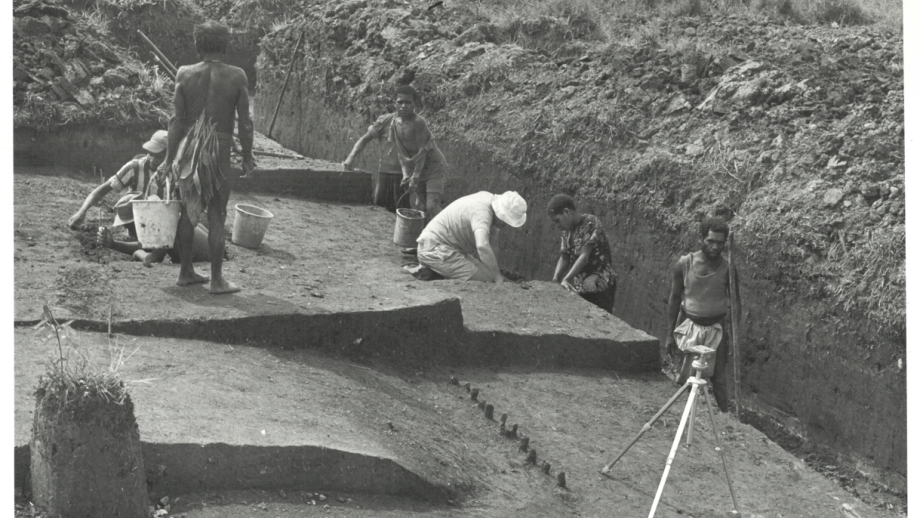
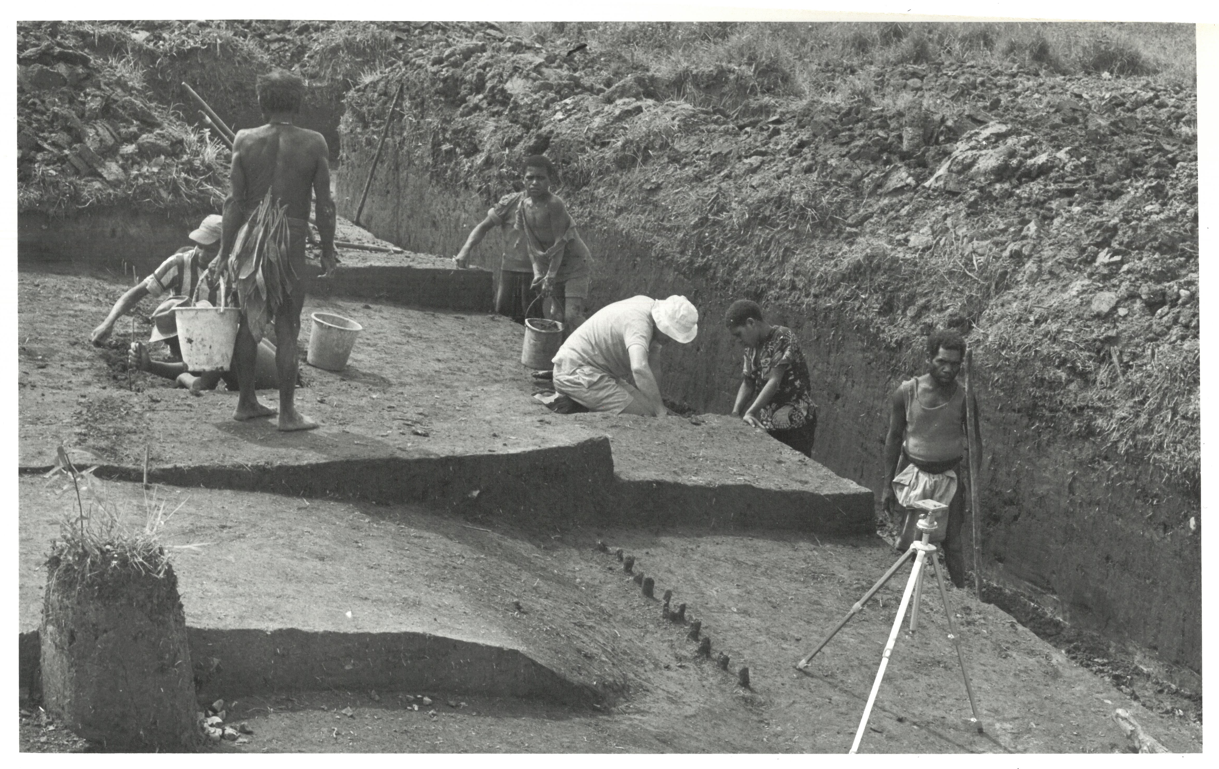
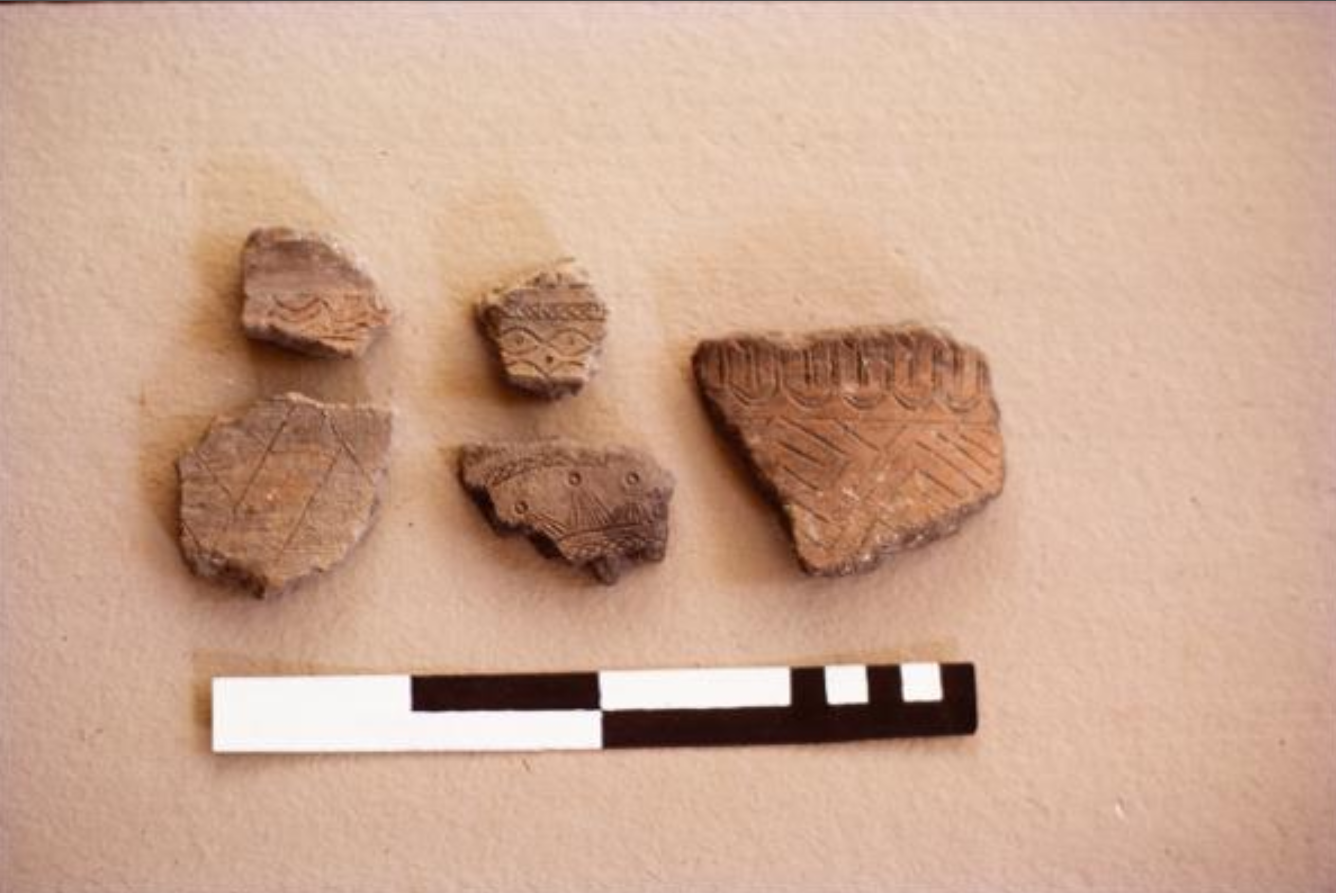
Many archaeologists and related academics from the Australian National University have excavated in Papua New Guinea in the hopes of discovering part of Papua New Guinea’s deep past. Archaeological and DNA evidence suggests that people have been living in Papua New Guinea for more than 50,000 years. Numerous archaeological sites have confirmed the long history of people in Papua New Guinea, from coastal sites on the Huon Peninsula, to sites in the Highlands at altitudes of more than 2000 metres in the Ivan Valley. The varied landscapes of Papua New Guinea allowed individual groups to develop their own distinctive cultures and languages, in response to their interactions with the land of their country.
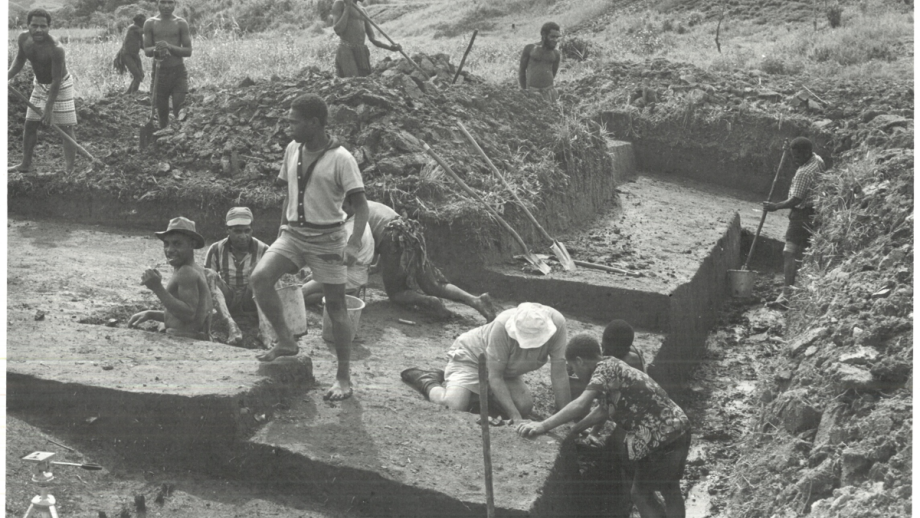
Archaeologists from the Australian National University have been investigating this long history of Papua New Guinea since the 1960s. ANU excavations have taken place across a broad range of Papua New Guinea, from the Highlands to Milne Bay to New Ireland and New Britain. The most famous of the ANU excavation projects, and perhaps the most intensive and long-lived, is that of the archaeological investigations at Kuk, a location about 1600 metres altitude in the upper Wahgi Valley of the Western Highlands Province of Papua New Guinea, near Mount Hagen, the provincial capital. These excavations were led by ANU archaeologist Jack Golson, appointed as the inaugural Professor of Prehistory at the ANU in 1969.
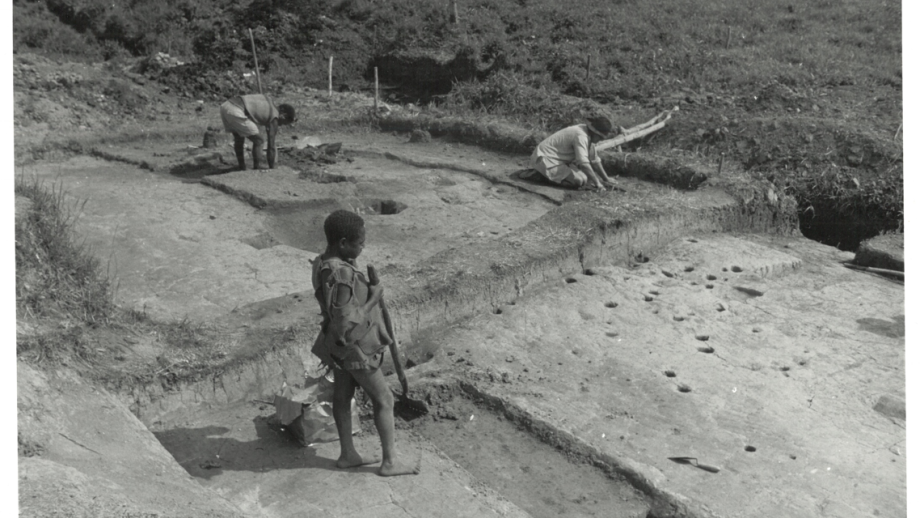
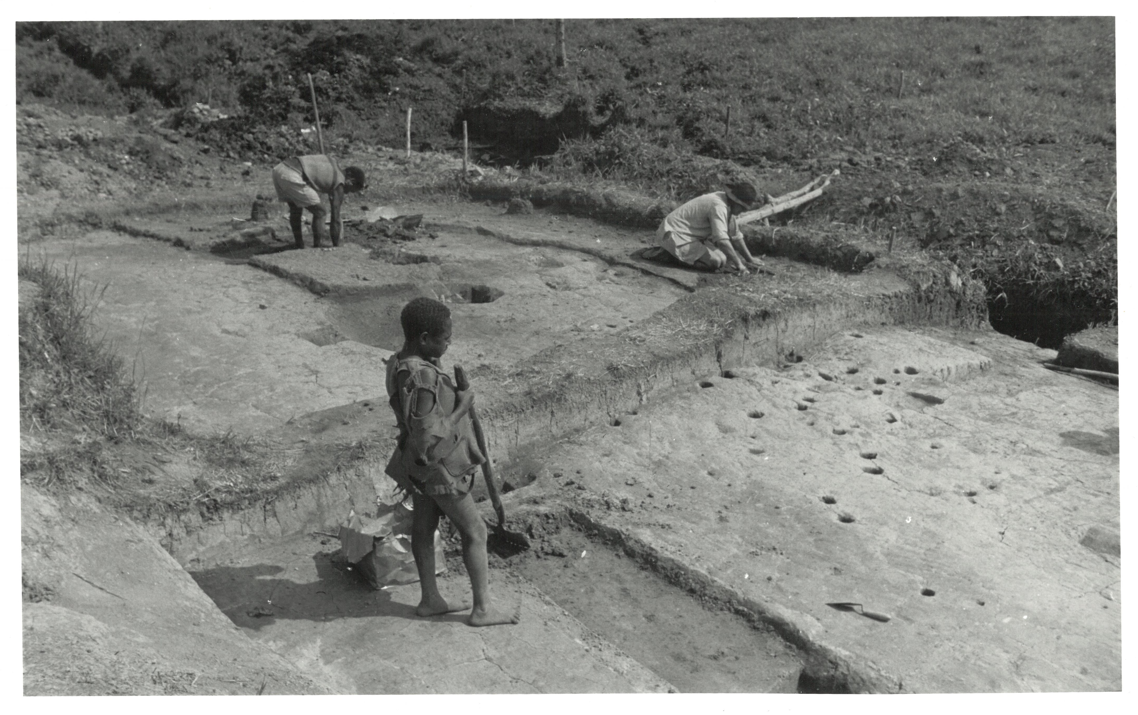
The excavations at Kuk were revolutionary, in that they demonstrated the independent development of agriculture in the Highlands of Papua New Guinea from 7,000 to 6,4000 years ago, and possibly as long as 10,000 years ago. The Kuk Early Agricultural Site is now a UNESCO World Heritage Site (inscribed 8 July 2008) and received the designation due to the ANU archaeological investigations at the site, which demonstrated its significance in the history of the world.
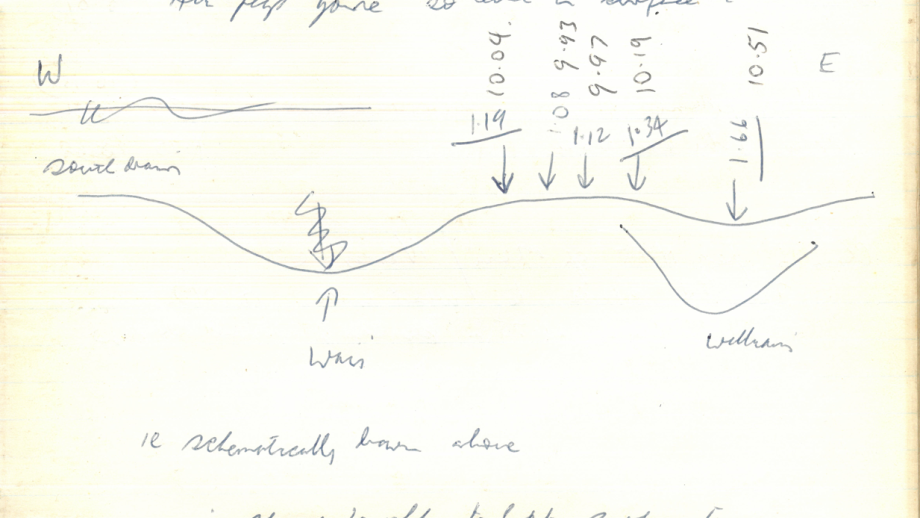
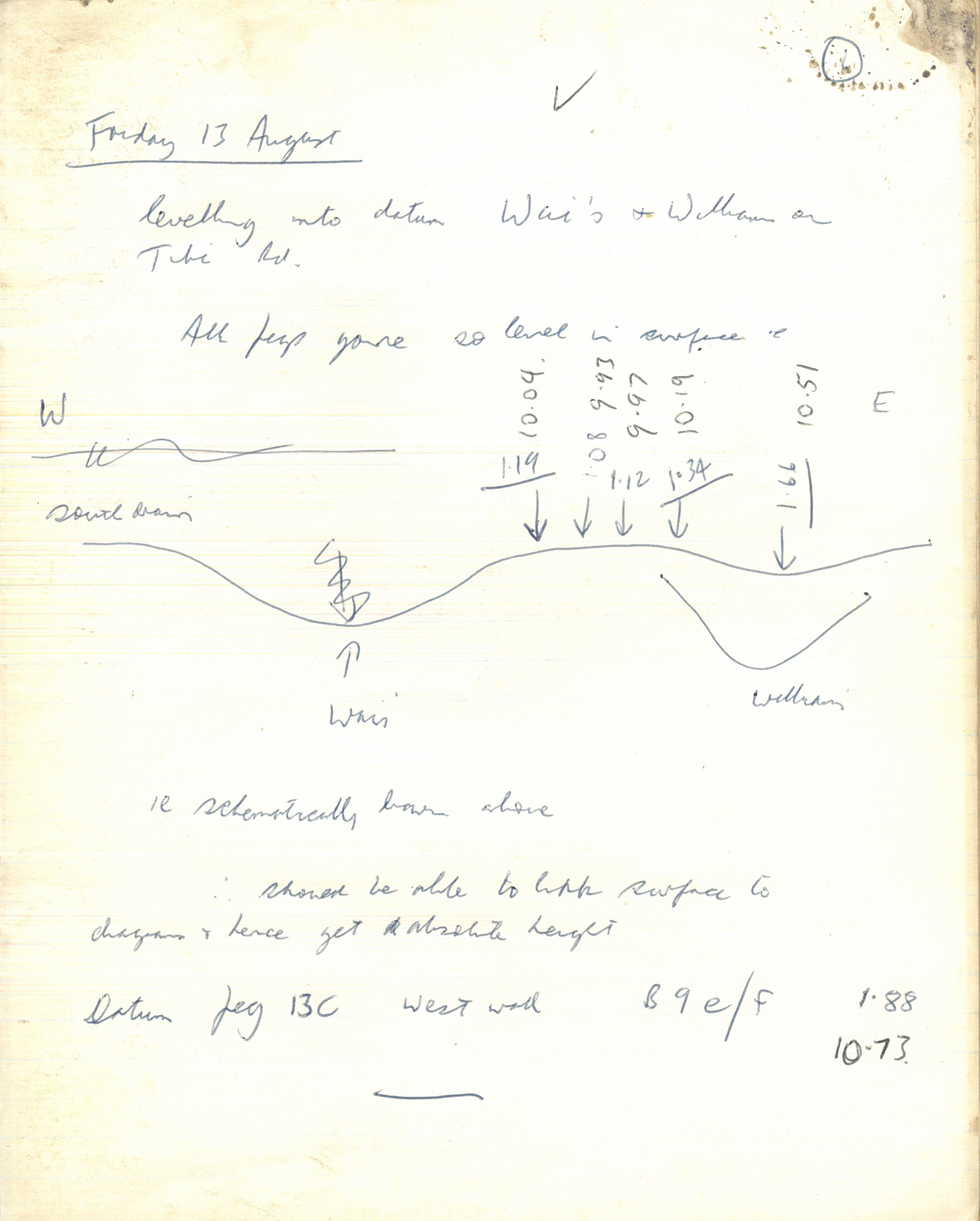
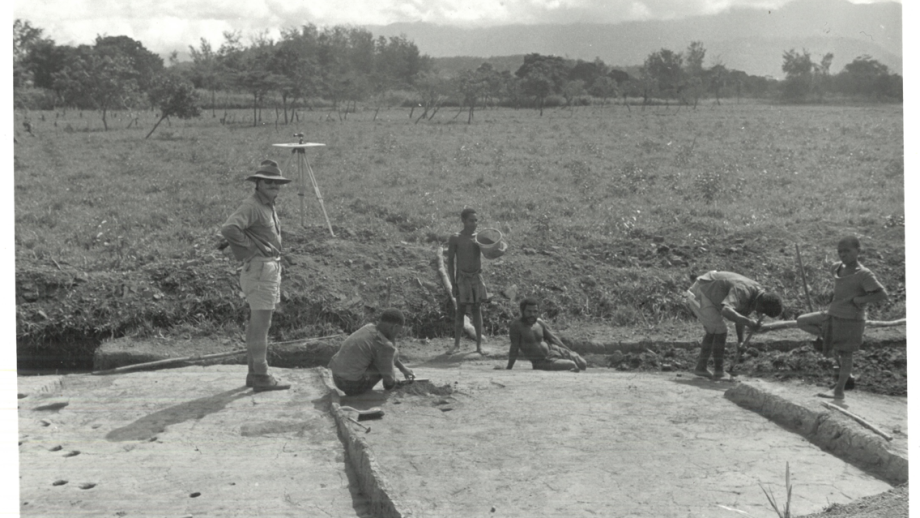
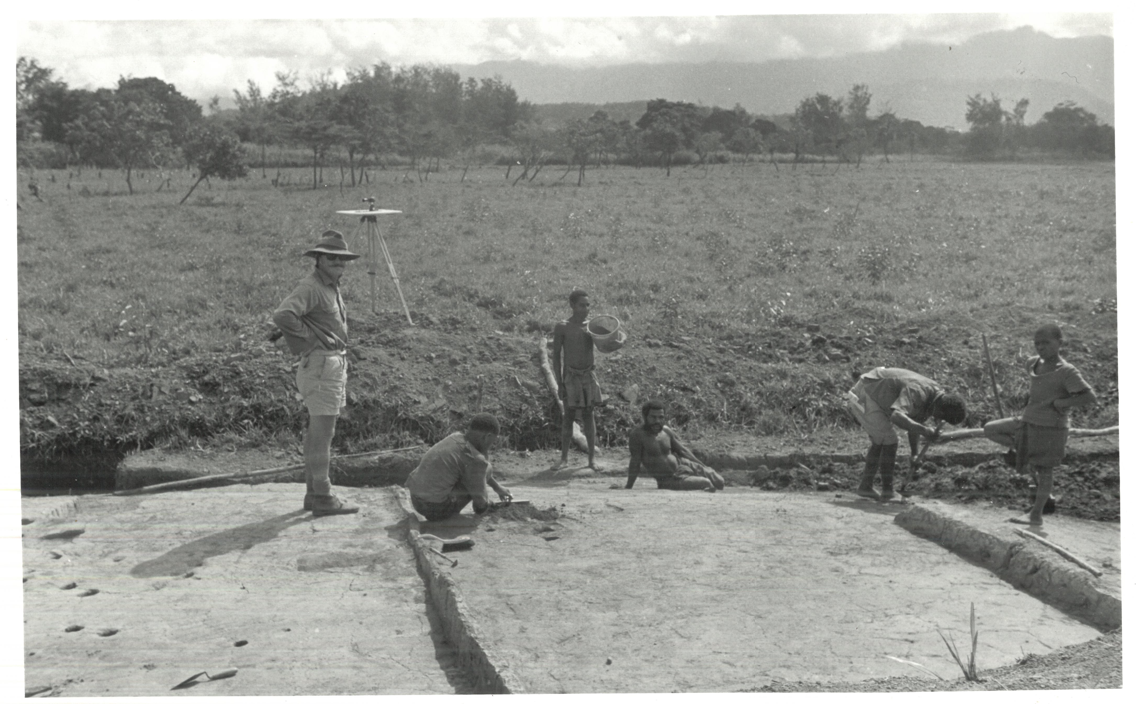
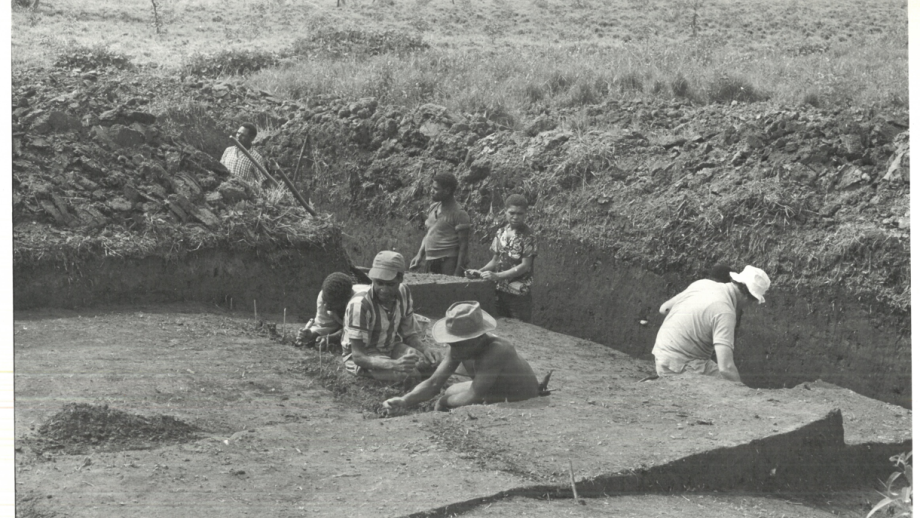
The site at Kuk was excavated by a team from the Australian National University, initially headed by Jack Golson from 1972-1990, followed by another period of fieldwork from 1998-1999 featured in the PhD research of Tim Denham (ANU, Professor in Archaeology). The excavations uncovered extensive drainage systems, along with pits and postholes, with wooden digging sticks discovered in the trenches. Evidence for the cultivation of taro, banana, and yam were found at the site.
In addition to the archaeological excavations, the initial team also involved geological and anthropological investigations of the surrounding area and communities. The collection of oral histories and local knowledge about the Kuk Swamp and previous land use also led to a study of traditional tool making techniques. Ole Christensen, a member of Jack Golson’s team, made a series of films of traditional practices in the area, which are available to view online here: https://hdl.handle.net/1885/733764521
While many archaeologists from the Australian National University have excavated in Papua New Guinea, below are biographies of a select number who have deposited their Papua New Guinea research with the ANU Archives:
Jack Golson AO was an archaeologist who did extensive fieldwork in the Pacific region. He studied history and archaeology at Cambridge University. From 1954 until he joined the ANU in 1961, he was a lecturer of archaeology at Auckland University. In 1969, Golson was appointed as the inaugural Professor of Prehistory at the ANU. He led the department until his retirement in 1991. His excavations at Kuk in Papua New Guinea proved the independent development of agriculture in the Papua New Guinea Highlands, which led to the site being designated a UNESCO World Heritage Site in 2008.
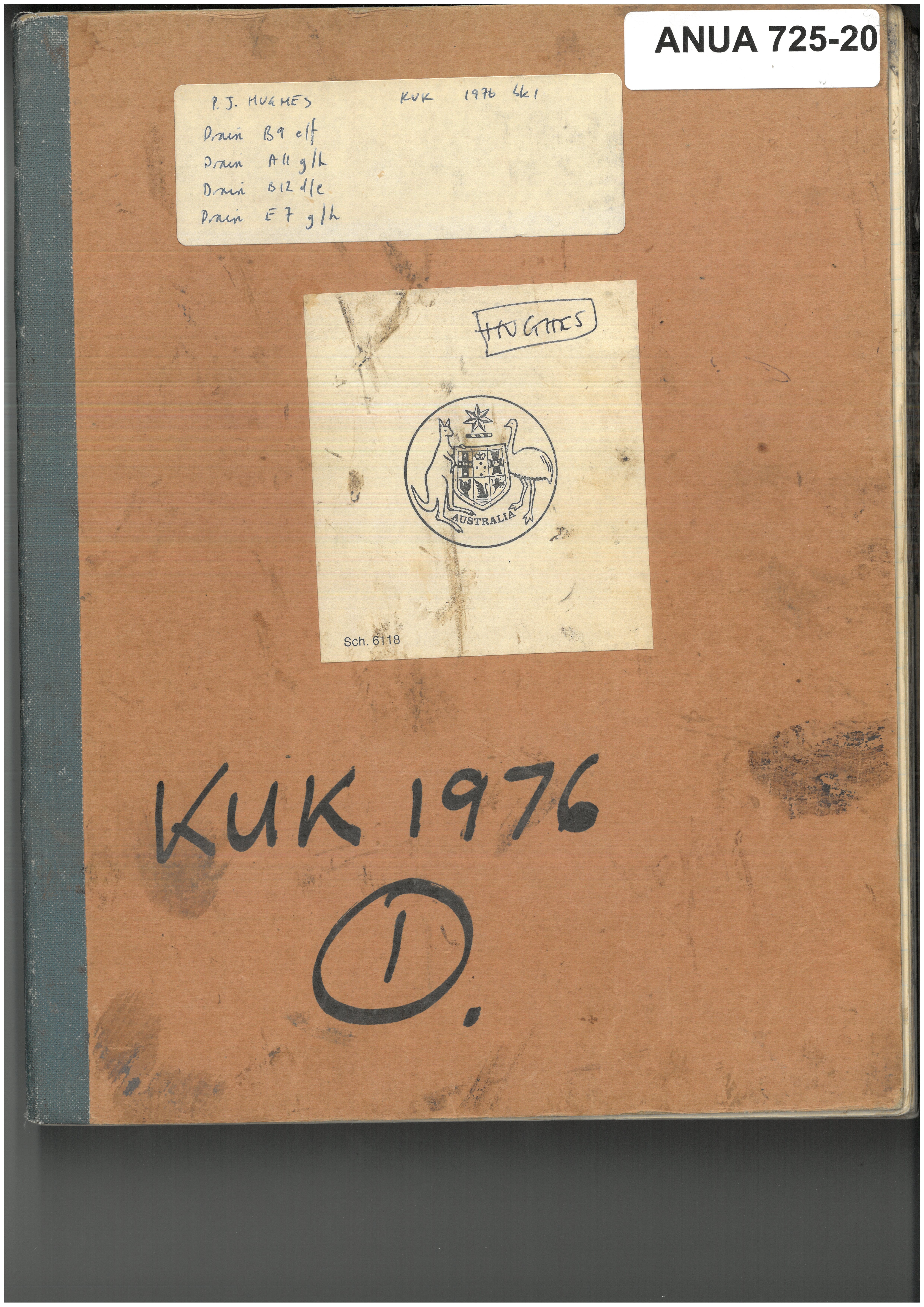
Philip Hughes worked full time as the Kuk project’s geoarchaeologist from 1974 to 1977 while at ANU. From 1985–1991, while at University of Papua New Guinea (UPNG), working with colleagues and students, he undertook research into soil erosion and catchment and swamp hydrology at Kuk aimed at further understanding the site’s geoarchaeology and human impact on soil erosion in the catchment from the late Pleistocene to the present.
James (Jim) Specht was a PhD scholar in the Department of Anthropology, Research School of Pacific Studies at the Australian National University in 1965. He was part of an archaeological group which carried out fieldwork studying Lapita pottery in Watom Island, near Raboul, and in Talasea, on the mid-north coast of New Britain. He was awarded a Ph.D for his thesis: Prehistoric and modern pottery industries of Buka Island, T.P.N.G. (1969). Specht joined the Australian Museum in June 1971. From 1991, he was Head of the Division of Anthropology and was Chief Scientist from 1997-2000 before retiring in November 2000.
Andrée Rosenfeld was a rock art researcher and archaeologist. She completed her PhD at the UCL Institute of Archaeology in 1960. She taught at the Department of Anthropology and Archaeology at the ANU from 1973 to her retirement in 1997. Her publications include 'Palaeolithic Cave Art' (1967, co-authored by Peter Ucko), 'Rock Art Conservation in Australia' (1985) and 'Early Man in North Queensland: art and archaeology in the Laura area' (1981, with David Horton and John Winter). She was instrumental in the founding the Australian Rock Art Research Association in 1983, and contributed to the promotion of the subject as a serious topic of study. The ANU Archives holds records relating to her excavations in Buang Merabak, New Ireland, Papua New Guinea.
Matthew Spriggs was the Professor of Archaeology in the School of Archaeology and Anthropology, College of Arts and Social Sciences at the ANU. Prior to this he was a Senior Research Fellow in Archaeology and Natural History, in what is now the College of Asia Pacific. Before joining the ANU in 1987, he was an Associate Professor in the Anthropology Department of University of Hawaii at Manoa, Honolulu. His research interests are the archaeology of Island Southeast Asia and the Pacific Islands, and Cornish Studies. In addition to his archaeological research papers, he has also donated to the ANU Archives an extensive collection relating to the Bougainville Crisis, as he was in Bougainville during the crisis and collected numerous newspaper articles, correspondence, conference papers, newsletters, posters, pamphlets, and ephemera.
John Peter White is an Australian archaeologist and editor. He was awarded his PhD from the Australian National University in PreHistory in 1968. The ANU Archives holds papers relating to his archaeological excavations in Lake Kopiago, Western Highlands District, Papua New Guinea (1967 and 1973) ; Kosipe, Central District (1964 and 1967); Irian-Jaya (May - June 1983); Brooker Island, Louisade Archipelago (1967); New Ireland (1969 - 1990); Balof 1 (1988); Balof 2 (1990); New Ireland (1988 - 1994); and New Britain (2001).
Wallace Raymond ('Wal') Ambrose was hired by the Department of Anthropology of the University of Auckland in 1956 as photographer and cartographer. He quickly became the organiser and site supervisor for all of Jack Golson's excavations during his time at the University of Auckland. In 1963, he joined the then Department of Anthropology and Sociology in the Research School of Pacific Studies at the Australian National University as a Research Assistant where Jack Golson had recently accepted a position. Ambrose completed a Diploma of Archaeological Conservation at the London Institute of Archaeology in 1965. Ambrose was a pioneer in the field of archaeological conservation, realising the need to stabilise artifacts from the water-logged excavations at Kuk in Papua New Guinea. He created methods for freeze drying the wooden artifacts being excavated from the Kuk swamp, a process that was successful in maintaining the original form of the artifacts, including marks of manufacture and use. His revolutionary treatment has now been widely adopted and recognised by the Cellulose, Paper and Textile Division of the American Chemicals Society and the Archaeological Materials Working Group of the International Council of Museums. Ambrose also developed and patented his invention for a temperature and relative humidity monitoring device for long-term soil monitoring, which was used to a great extent at Kuk and on many ANU-led excavations throughout the region, and humorously and fondly known throughout the department as “Wal’s balls” for their spherical shape.
Wal Ambrose was involved in many excavations in Papua New Guinea during his long career at the Australian National University including: Kuk (1966, 1968); Anir Island, New Ireland (1970-1971); Kuk (1972); survey of all known obsidian source sites in Papua New Guinea (1974); Admiralty Islands (1977), Lou and Hus Island, Admiralty Island (1978); Lou, Baluan, and Manus, Admiralty Islands (1981); Manus, New Ireland, New Britain (1984); Lou Island, Manus and Boduna Island, Talasea (1985); Baluan Island, Manus, and Schouten Islands (1987); and Pamwak rockshelter and Manus Island (1989, 1990).