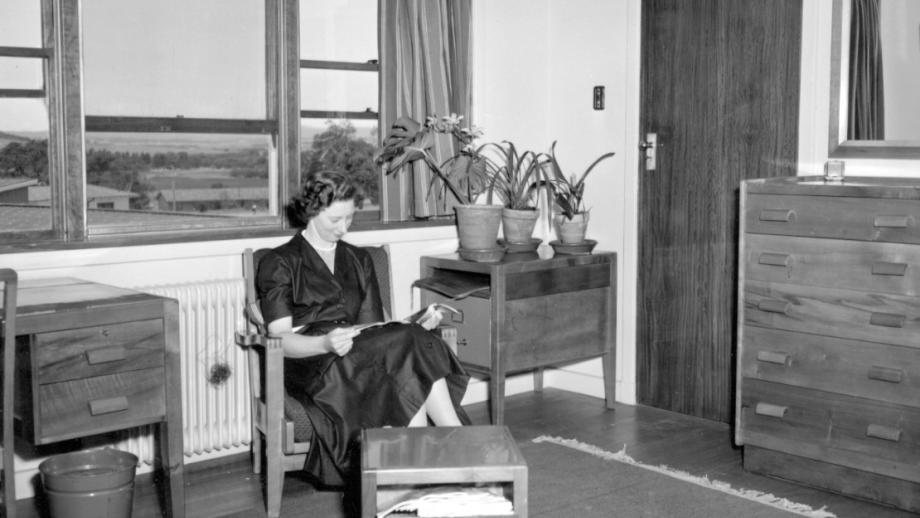
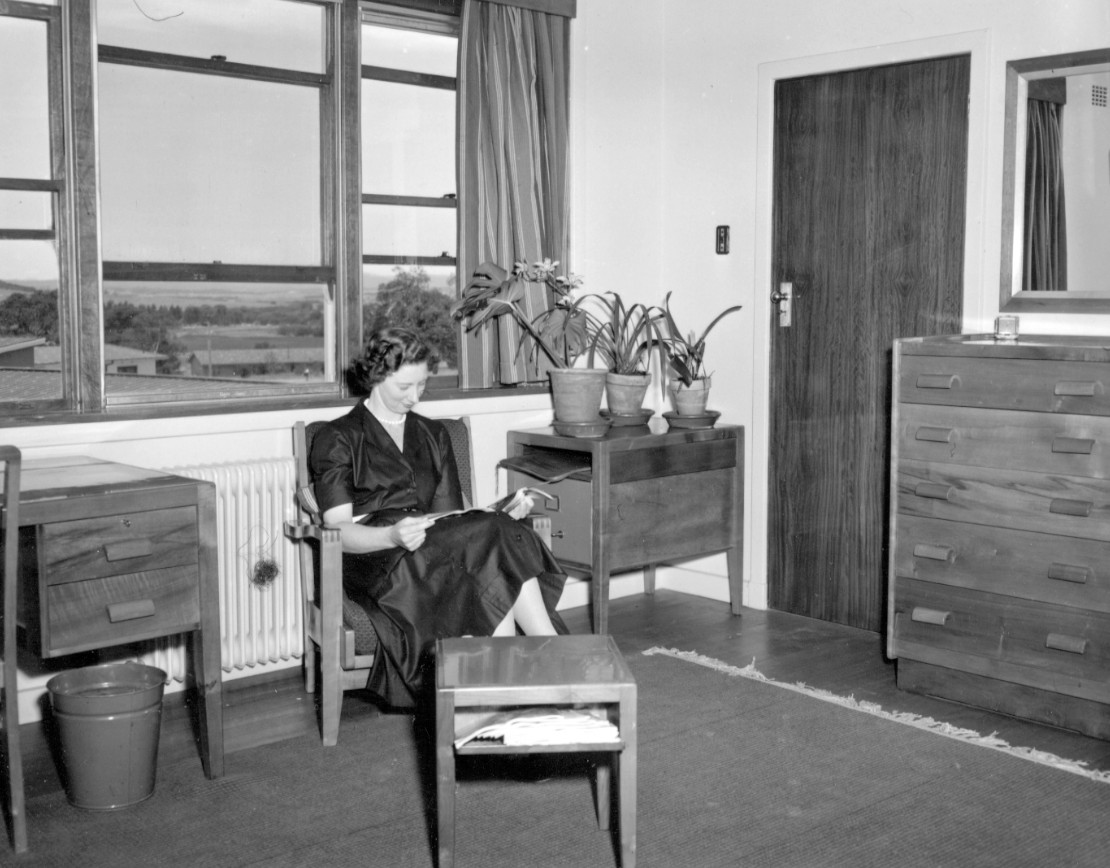
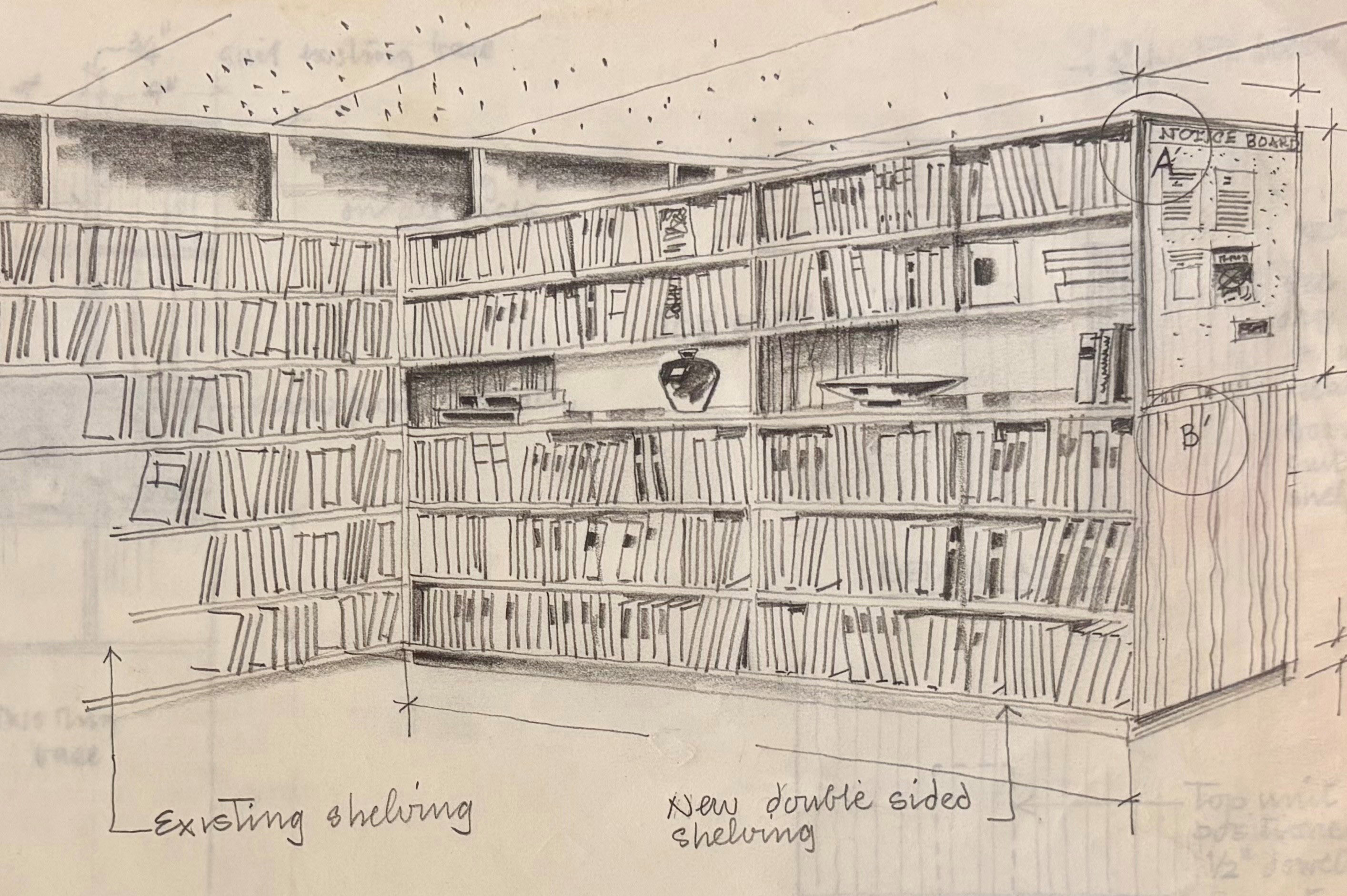
It was the intention to use Australian timbers and fabrics as much as possible for the University House furnishings. ANU Registrar Ross Hohnen approached a number of Australian designers to submit designs for the furniture and furnishings. Among them was Melbourne-based designer Frederick (Fred) Ward.
Ward was originally an illustrator and cartoonist before he began designing furniture in the late 1920s. He was self-taught, trawling antique shops for inspiration and attending technical-drawing classes at night. He focused on function, making joints a point of interest in his work and used mainly native Australian timbers. In 1932 he established his own business in Melbourne and also worked for The Myer Emporium Ltd, managing its fine-furniture workshop. In 1934 he launched an ‘austere unit range’ of modular furniture, its affordability making it popular during the Depression. In the 1940s he was engaged by the Department of Aircraft Production, where he worked on the design of the timber-framed Mosquito bomber and Beaufighter aircraft. He then returned to his own designs, launching DIY Patterncraft furniture patterns in 1947. In 1948 he designed the first chair for Fred Lowen and Ernest Rodeck, made in their then backyard factory (later Fler Co. Ltd).
Impressed by the designs he submitted for University House, ANU Vice-Chancellor Sir Leslie Melville asked Ward if he would design all the furniture and furnishings. Ward subsequently relocated to Canberra and became the head of the newly established ANU Design Unit. As the first head of the ANU Design Unit he oversaw campus planning, and furniture and interior design. He was joined by a team of talented designers and craftsmen including Derek Wrigley, who was appointed Assistant University Designer in 1957, and who took over as Head of the Unit when Ward returned to private practice in 1961. Some of the other talented staff working in the Unit who produced designs for ANU and University House were Hans Pillig (furniture designer), Gerald Easden (interior designer), Jack Lowe (design draftsman), and Charles Bastable (designer).